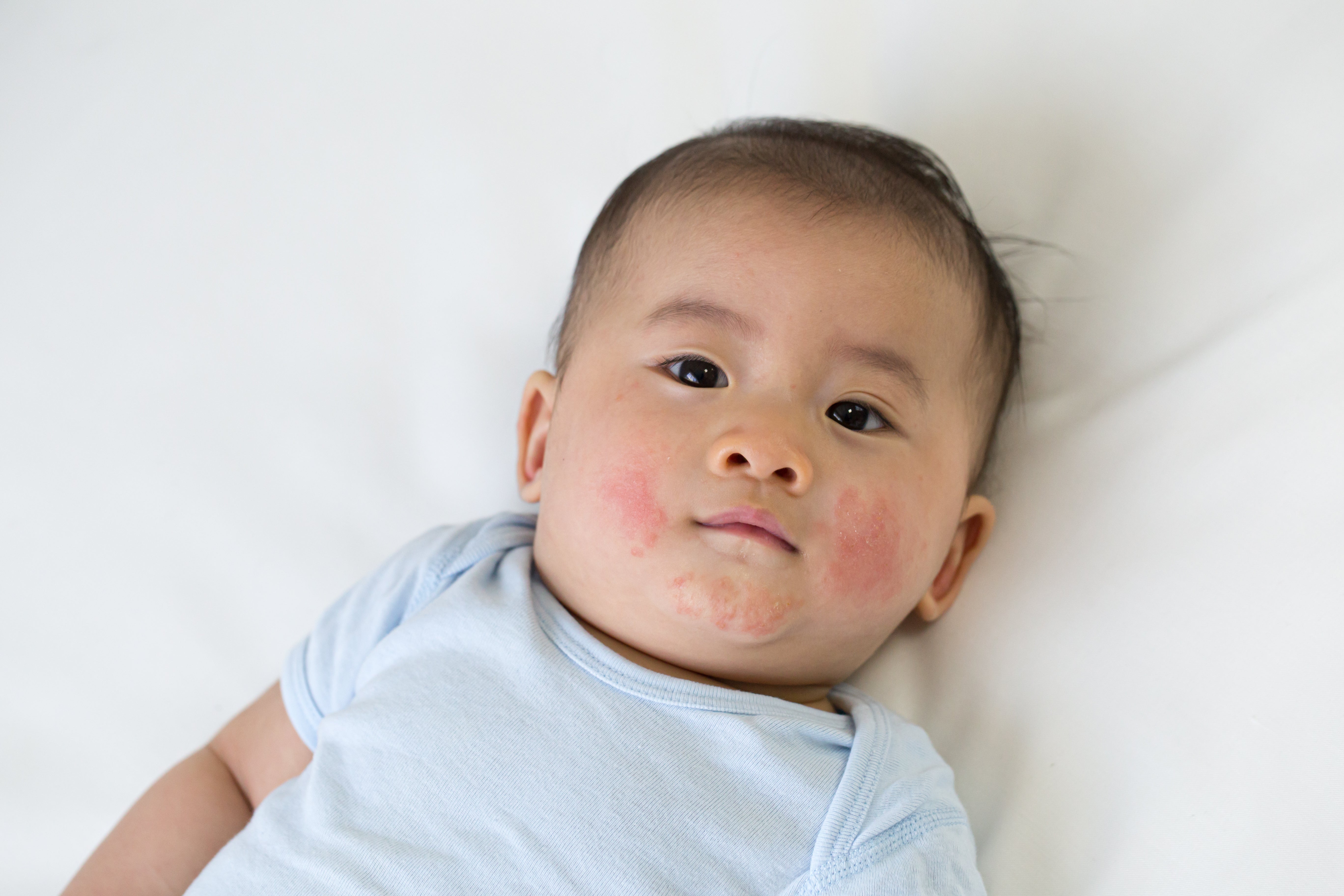
Your baby woke up with a rash on their face. It wasn't there yesterday - or maybe it was, and it's just getting worse. You're not sure if you should be worried, if it'll go away on its own, or what you're even supposed to do about it.
If that sounds familiar, you're far from alone. Facial rashes are one of the most common things parents notice in the first year of a baby's life - and one of the most confusing, because they can look alarming even when they're not serious.
Why Baby Facial Skin Is So Reactive
To understand facial irritation, it helps to first understand what baby skin is actually up against.
A baby's skin is structurally different from adult skin in several key ways. It's thinner, produces less natural oil, and has a less developed skin barrier - meaning it's less equipped to retain moisture and fend off external irritants. The skin's pH also takes time to stabilise after birth, making it more susceptible to imbalance in the early months.
Now factor in everything a baby's face comes into contact with on any given day:
- Saliva from drooling (which increases significantly as teething approaches)
- Milk from feeding or spit-ups
- Repeated wiping and cleaning throughout the day
- Fabric friction from clothing, bibs, and bedding
- Close physical contact from being held and cuddled
None of these things are harmful on their own. But for skin that's still developing its defences, the cumulative effect of repeated exposure can quickly show up as redness, dryness, or irritation - especially on the face, where most of this contact happens.
Common Causes of Facial Redness in Babies

Not all redness looks or behaves the same, and identifying the likely cause can help you respond appropriately.
Milk rash (neonatal acne)
This typically appears in the first 2-4 weeks and presents as small red bumps or whiteheads, usually on the cheeks, nose, and forehead. It's largely driven by maternal hormones still circulating in the baby's system and tends to resolve on its own within a few weeks without any treatment needed.
Drool rash
As babies start drooling more, often from around 2-3 months and peaking around teething, saliva sits on the skin around the mouth, chin, and neck folds. Saliva contains digestive enzymes that, with prolonged contact, can break down the skin barrier and cause redness and chapping. It's one of the most persistent forms of facial irritation in infants.
Contact irritation
This is a broader category covering redness triggered by friction or repeated physical contact. Even gentle wiping, done many times a day over weeks, can gradually compromise the skin barrier - leading to sensitivity, redness, or dry patches, particularly around the cheeks and chin.
Eczema
Infantile eczema often appears on the face first, presenting as dry, red, and sometimes weepy patches. It can look similar to the above conditions, which is why eczema that doesn't improve with basic skincare measures is worth flagging to a paediatrician or dermatologist.
What You Can Do: Building a Protective Routine
The goal isn't to prevent all contact - that's simply not possible with a baby. Instead, the focus should be on strengthening the skin so it can handle everyday exposure without reacting as intensely.

Cleanse gently and minimally
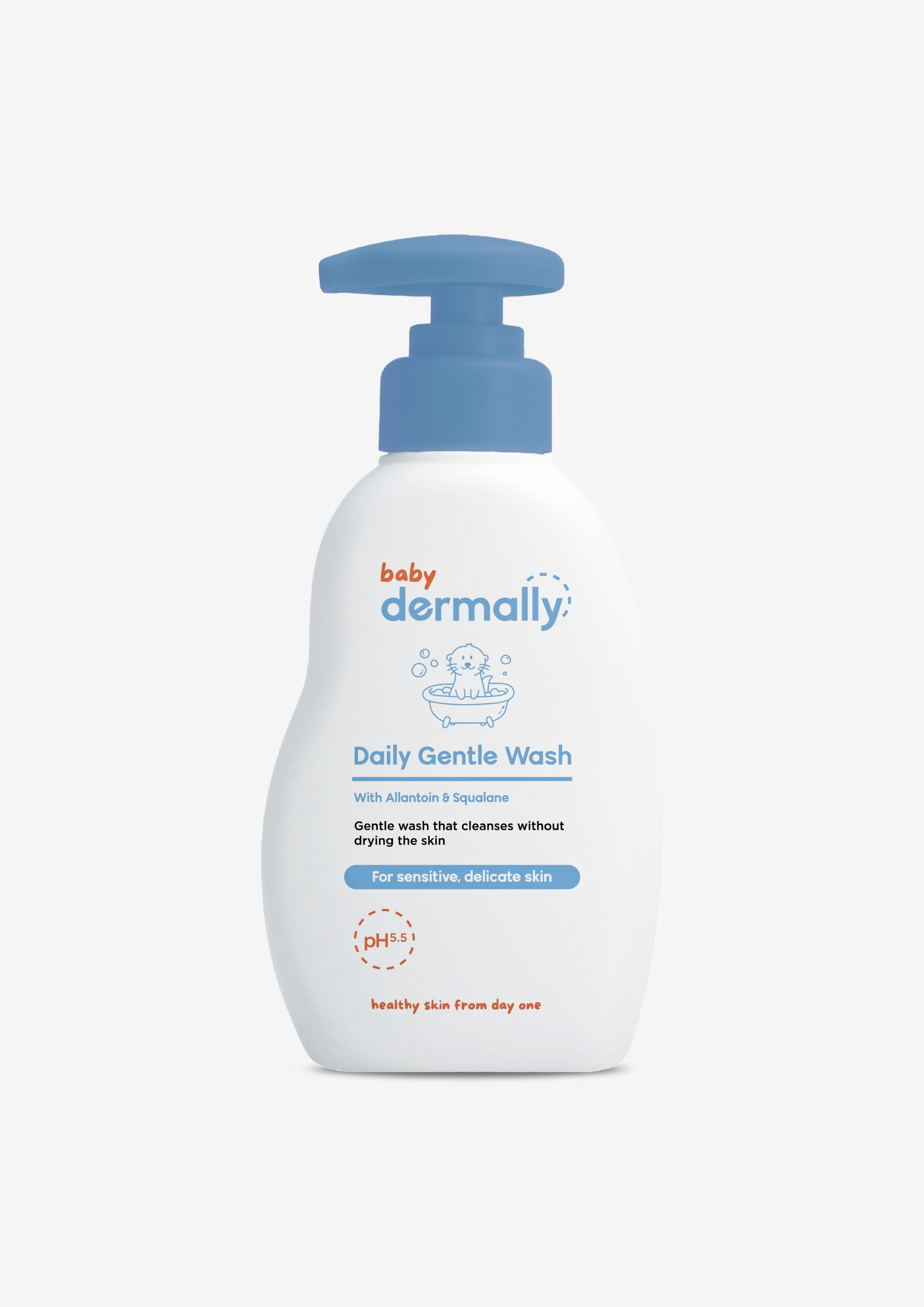
Over-cleansing is a surprisingly common issue. Washing a baby's face too frequently, or with the wrong product, can strip away what little natural oil the skin has. Use a mild, pH-balanced cleanser like our Daily Gentle Wash - it's formulated for newborn skin and cleans effectively without disrupting the skin barrier.

Pat, don't rub
When wiping or drying your baby's face after feeding or cleaning, use a soft cloth and pat gently rather than rubbing. It's a small habit change that makes a meaningful difference in reducing friction over time.

Keep the skin hydrated
Moisturising consistently helps maintain the skin barrier's ability to protect against irritants. For the body, our Daily Moisturizing Lotion provides reliable everyday hydration. But the face, given how much more it endures, benefits from a more targeted approach.
Why the Face Deserves Its Own Product
Here's something many parents don't initially think about: the face needs different care from the rest of the body. It's more exposed to the elements, gets wiped far more frequently, and bears the brunt of saliva and milk contact throughout the day. A general body lotion, however good, isn't always enough.

Our Daily Protective Face Cream was formulated specifically with this in mind. Rather than just moisturising, it works to create a protective layer over delicate facial skin - helping to shield it from the repeated contact that causes irritation in the first place.
Its key ingredients do a lot of the heavy lifting:
- 7x Ceramides - deeply nourishes deep facial skin layers from within and reinforces the skin barrier at a structural level
- Panthenol - soothes and supports skin repair
- Squalane - provides lightweight, non-greasy hydration
- Allantoin - calms redness and reduce inflammation
- Vitamin E - helps protect the skin from environmental stressors
- Shea Butter - delivers deep, lasting moisture without heaviness
It's gentle enough for newborns, dermatologically tested, and free from SLS/SLES, parabens, phthalates, and soap. And because it's lightweight, it absorbs easily - which any parent of a wriggly baby will appreciate.
Used consistently as part of a daily routine, it acts as a quiet but effective shield for one of the most hardworking, underappreciated patches of skin on your baby's body.
Psst! Mummies, you can use this as nipple cream too!